De-icing products are designed to keep water moving during the coldest months, preventing dangerous ice buildup around docks, piers, boats, and water intakes. By maintaining open water, they help safeguard structures from ice-related damage. Built for efficiency and reliability, our de-icers ensure year-round protection and performance in ponds, lakes, and other water features.
Whether you’re managing a cozy lakeside dock or overseeing industrial waterfront infrastructure, our deicing systems are built to protect your assets year-round. With experience across Canada and beyond, we understand how ice can threaten property, safety, and operations — and how to stop it.
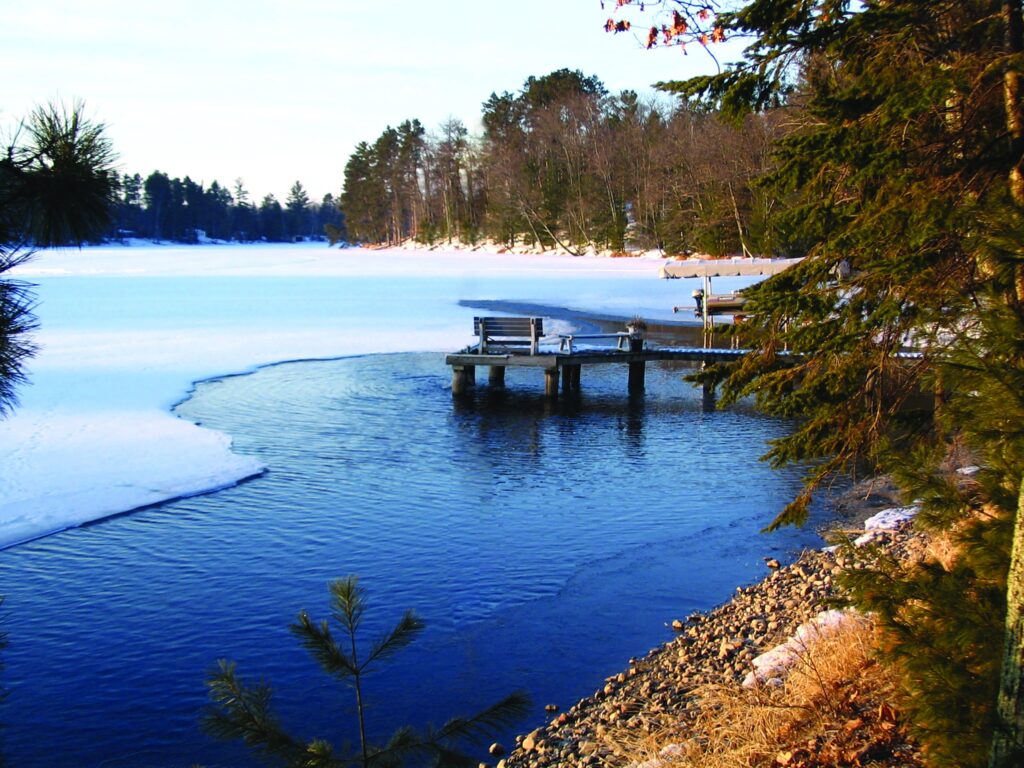
We work with homeowners, marina operators, municipalities, and industrial clients to design custom de-icing solutions. Any questions? We can help you choose the right system for your site and climate.
De-icing systems prevent the formation of ice in freshwater or saltwater environments. By keeping key areas ice-free, they help:
Protect docks, pilings, and boats from damage
Maintain access to marinas, ferry crossings, and ports
Prevent ice jacking and shoreline pressure
Reduce costly springtime repairs
Results vary depending on depth, orientation and climate. As a guideline:
½ HP = ~30 ft diameter open area
¾ HP = ~40 ft
1 HP = ~50 ft
Best performance is in deeper water and earlier in the season; colder later‑winter conditions may reduce the open area.
It depends on the shape and size of the structure. A straight dock of 40–50 ft may be covered with one unit positioned at the end and aimed toward shore. For L‑shaped or T‑shaped docks, very long docks (60 ft+), floating docks or shallow water zones, more than one unit or strategic placement may be required.
In mild winter regions: ½ HP might suffice
In colder zones or for larger structures: ¾ HP or 1 HP are typical
If you’re unsure, sizing up gives extra coverage and peace of mind — you can always run the unit less often.
Water is densest at around 4°C. Our systems harness this principle by moving slightly warmer water from the bottom upward, disrupting the freezing process at the surface.


